Published 2026-07-15
If you've moved to St. Joseph from somewhere else and found yourself cleaning gutters more often than you used to, you're not imagining it. The tree mix here is genuinely harder on gutters than the national average, and most maintenance advice you'll find online was written for a different canopy.
The three species that cause most of the problem
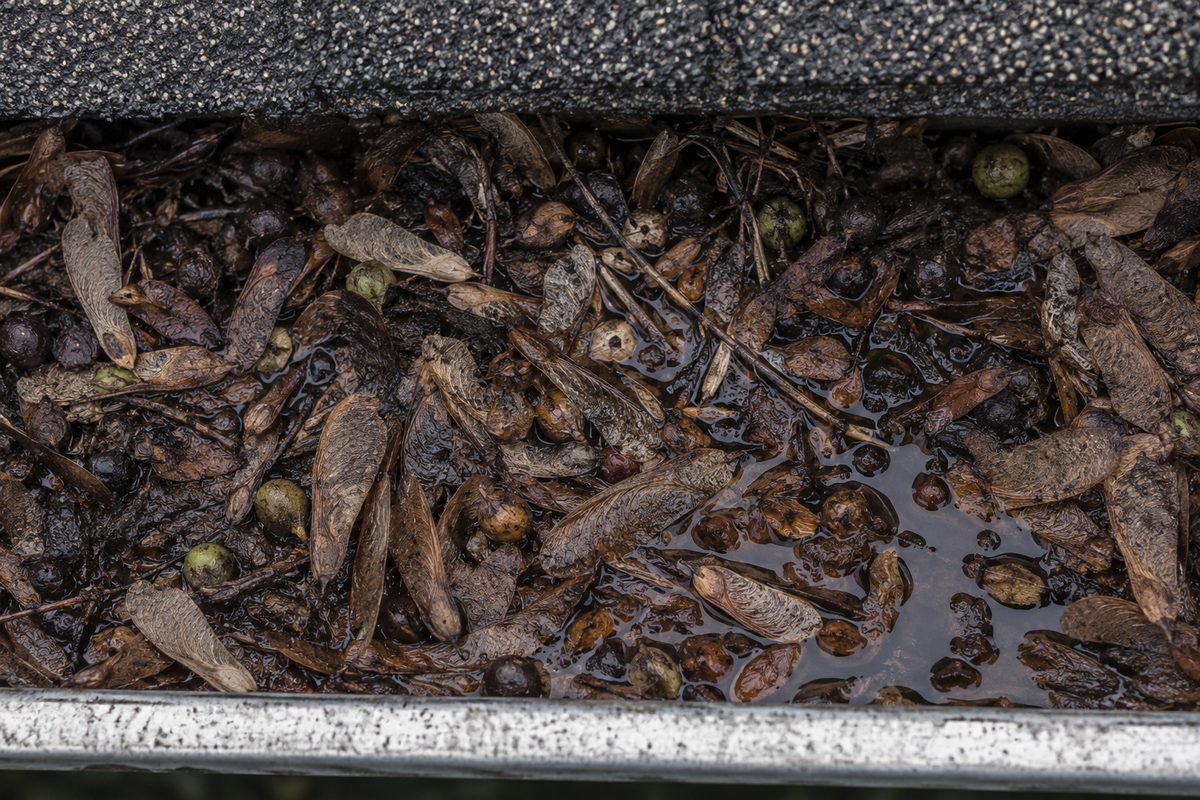
St. Joseph's urban canopy is dominated by hackberry, boxelder, and American elm, averaging around 43 feet tall and roughly 45 years old. That age matters: a mature tree drops dramatically more material than a young one, and a 45-year-old hackberry directly over a roofline is a debris delivery system.
Hackberry
Hackberry produces small round drupes — berry-like fruit about the size of a pea — in enormous quantity. They drop from late summer through winter, and unlike leaves they don't dry out and blow away. They hold moisture, roll into the low points of a gutter run, and pack into downspout elbows where they form a plug that water can't push through.
Hackberry also drops leaves late, often well into November. If you schedule your fall cleaning for mid-October because that's when the maples finish, you'll be cleaning again.
Boxelder
Boxelder is a maple, and it produces samaras — the winged seeds kids call helicopters — in volume that surprises people. A single mature boxelder can drop tens of thousands in a season. They arrive in spring and early summer, they mat together when wet, and the wing structure makes them interlock into a dense fibrous layer that behaves more like felt than like loose debris.
That interlocking is why boxelder defeats cheap gutter screens. Individual samaras are small enough to pass through perforated aluminum, then they reassemble into a mat on the inside of the gutter where you can't see them.
American elm
Elm seeds are small, flat, papery, and released in a short heavy burst in spring — often the whole crop within two weeks. They're light enough to travel on wind, which means an elm two houses down still contributes to your gutters. Because they're thin and flat, they slip through most guard systems and settle into a layer at the bottom of the trough that holds water against the aluminum.
Why this changes the maintenance schedule
The standard advice is to clean gutters twice a year. That's reasonable in a neighborhood dominated by oak and maple with moderate density. In much of St. Joseph it isn't enough, for two reasons.
First, the debris arrives in more waves. Elm in spring, boxelder in late spring and early summer, hackberry from late summer through winter, plus general leaf fall in autumn. A twice-a-year schedule will always miss at least one of those.
Second, this debris is denser and wetter than dry leaves. It compacts rather than blowing out, and it holds water. A gutter with three inches of packed boxelder and hackberry in it is carrying real weight, and weight is what pulls hangers out of fascia board.
For most homes with any of these three species overhanging the roof, three cleanings a year is the realistic number: once after spring seed drop, once mid-season, and once in late fall after the hackberry finishes. Our gutter cleaning page covers what each visit should include.
What to do about it
Identify what's actually over your roof
Walk the perimeter of the house and look up. You're checking which trees have branches over the roofline, not which trees are in the yard. A large hackberry twenty feet from the house with no overhang contributes far less than a small one directly above the gutter.
Quick identification: hackberry has distinctive warty, corky ridged bark that's hard to mistake once you've seen it. Boxelder has compound leaves with three to five leaflets and often grows multi-trunked. Elm has doubly-serrated leaves with an asymmetric base.
Consider micro-mesh, not screen
This is the specific place where the local tree mix should change your buying decision. Perforated aluminum screen has openings sized to block leaves, and hackberry drupes and elm seed go right through. Micro-mesh has openings fine enough to stop them.
Guards won't eliminate maintenance — debris still collects on top and needs brushing off — but under these three species quality micro-mesh can take you from three cleanings a year to about one. We go through the guard types and the payback math here.
Check downspouts specifically
With this debris profile, the downspout elbow clogs before the trough does. If your gutters overflow during a storm but look reasonably clear from a ladder, the blockage is almost certainly at the elbow. Any cleaning you pay for should include flushing every downspout and confirming flow at the bottom.
Don't prune reflexively
It's tempting to solve this with a chainsaw. Before you do, remember what that canopy is doing for you — shade that cuts summer cooling costs, stormwater absorption, and property value. Selective pruning of branches directly over the roofline is reasonable. Removing a healthy mature tree to avoid three gutter cleanings a year is a bad trade, and St. Joseph's canopy is a genuine asset to the city.
The short version
St. Joseph's dominant trees drop seed that's smaller, wetter, and more interlocking than the leaf litter most gutter advice assumes. Plan on three cleanings a year if any of them overhang your roof, buy micro-mesh rather than screen if you buy guards at all, and make sure whoever cleans your gutters is flushing the downspouts rather than just clearing the trough.