Published 2026-07-22
There are two windows in the Missouri year where a gutter cleaning delivers most of its value. Hit both and you've solved most of the problem. Miss them and you can clean three times a year and still get overflow when it counts.
Window one: late October through November
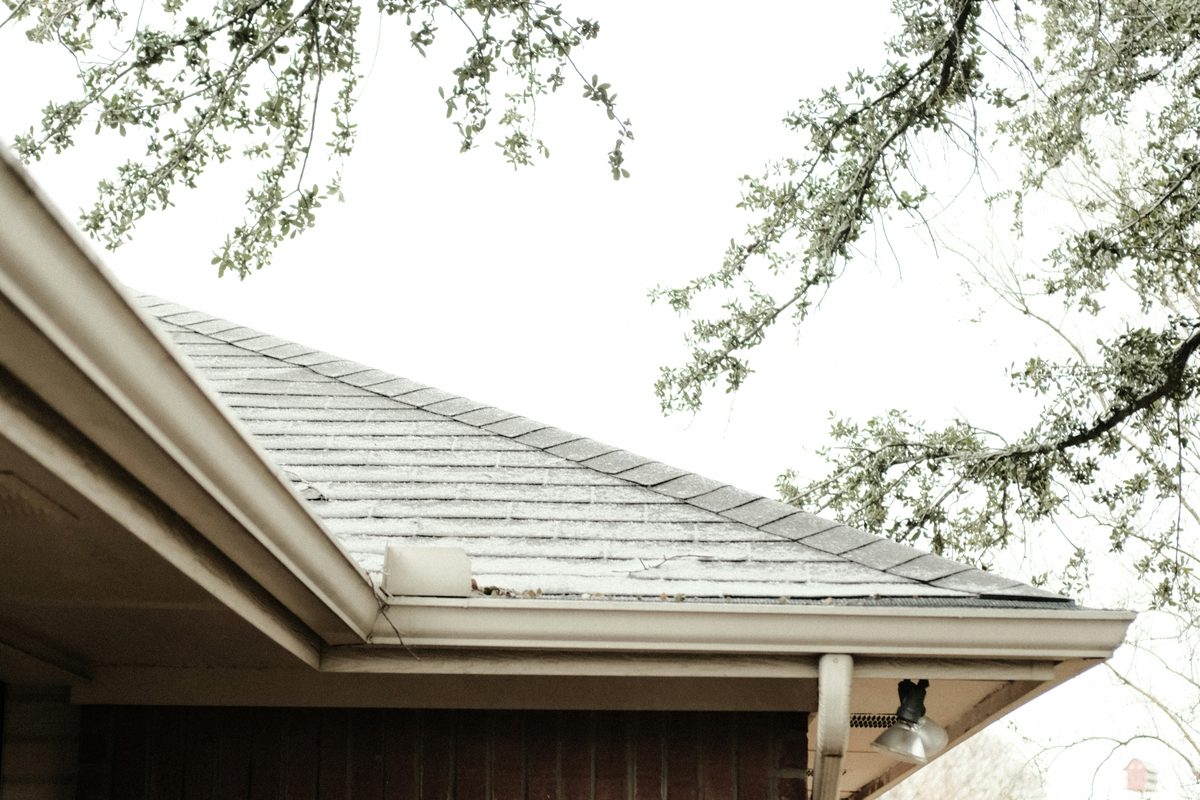
This is the highest-value cleaning of the year, and it isn't close.
The reason is ice, not leaves. Once temperatures start crossing freezing overnight and climbing above it during the day, any water sitting in a clogged gutter goes through a freeze-thaw cycle. Ice expands, works hangers loose, and adds enormous weight — a 40-foot run holding ice can carry hundreds of pounds. That's how gutters end up hanging off the fascia in February.
Worse, a blocked gutter contributes to ice damming. Meltwater running off the roof hits the blockage, backs up under the shingle edge, refreezes, and pushes water into the roof deck. Ice dams are primarily an attic insulation and ventilation problem, but a clogged gutter makes a marginal roof into a leaking one.
Wait for the leaves to actually finish. The common mistake is cleaning in early October because the maples turned. In St. Joseph, hackberry and oak hold leaves well into November. Clean too early and you've paid to clear a gutter that refills three weeks later. Late October through mid-November is the window.
Window two: late May through June
Spring cleaning gets less attention than fall and it shouldn't. Two things are happening.
First, seed drop. Elm releases in a short heavy burst in spring, boxelder samaras come down through late spring and early summer, and both are small enough to defeat screen guards. By June there can be a substantial mat in the gutter that never involved a single leaf.
Second, storm season. Missouri averages roughly 38 inches of rain a year and a large share of it arrives between March and June, frequently as 1–2 inch events. That's precisely the volume that a partially blocked gutter cannot handle. Overflow at a corner during a spring storm is what puts water against the foundation, and in the clay-heavy soil around St. Joseph that water doesn't drain away quickly.
Why timing beats frequency
Homeowners often assume the answer to gutter problems is cleaning more often. Usually the answer is cleaning at the right time.
A gutter cleaned in September and again in January has been cleaned twice and was clogged through both of the periods that mattered — the November freeze onset and the spring storm line. A gutter cleaned in early November and early June has also been cleaned twice, and was clear for both.
If you're only going to do it once a year, do it in November. If twice, November and June. A third mid-season cleaning is worth it under heavy canopy — see why St. Joseph's tree mix pushes that number up.
Book earlier than you think
Everyone in Buchanan County wants their gutters cleaned in the same three weeks. Local crews book out, and the first hard freeze arrives whether you got on the schedule or not.
Call in September for fall work and in April for spring work. You'll get the date you want instead of whatever's left, and you'll avoid the pattern where a storm rolls through, everyone calls at once, and the whole market is two weeks out.
Times not to bother
Mid-winter. Ladder work on frozen ground with ice in the gutter is dangerous and doesn't accomplish much. If gutters are already frozen and clogged, the fix is addressing ice dams, not scraping the trough.
Mid-summer, unless something's wrong. July and August are quiet for debris. If you're seeing overflow in August, that's a diagnostic signal — probably a downspout blockage or a pitch problem, both of which are repairs rather than cleanings.
Right before a listing photo shoot, if that's the only reason. Clean gutters don't photograph. Spend it on landscaping.
A simple annual schedule
- April: book your spring cleaning. Walk the perimeter after the first big storm and look for overflow points.
- Late May–June: spring cleaning, after seed drop finishes.
- September: book your fall cleaning.
- Late October–November: fall cleaning, after leaves finish. The important one.
- Any time you see overflow during rain: that's not a schedule item, that's a problem to diagnose.
Two visits, timed properly, handle most St. Joseph homes. Here's what each one should include, and what it should cost locally.